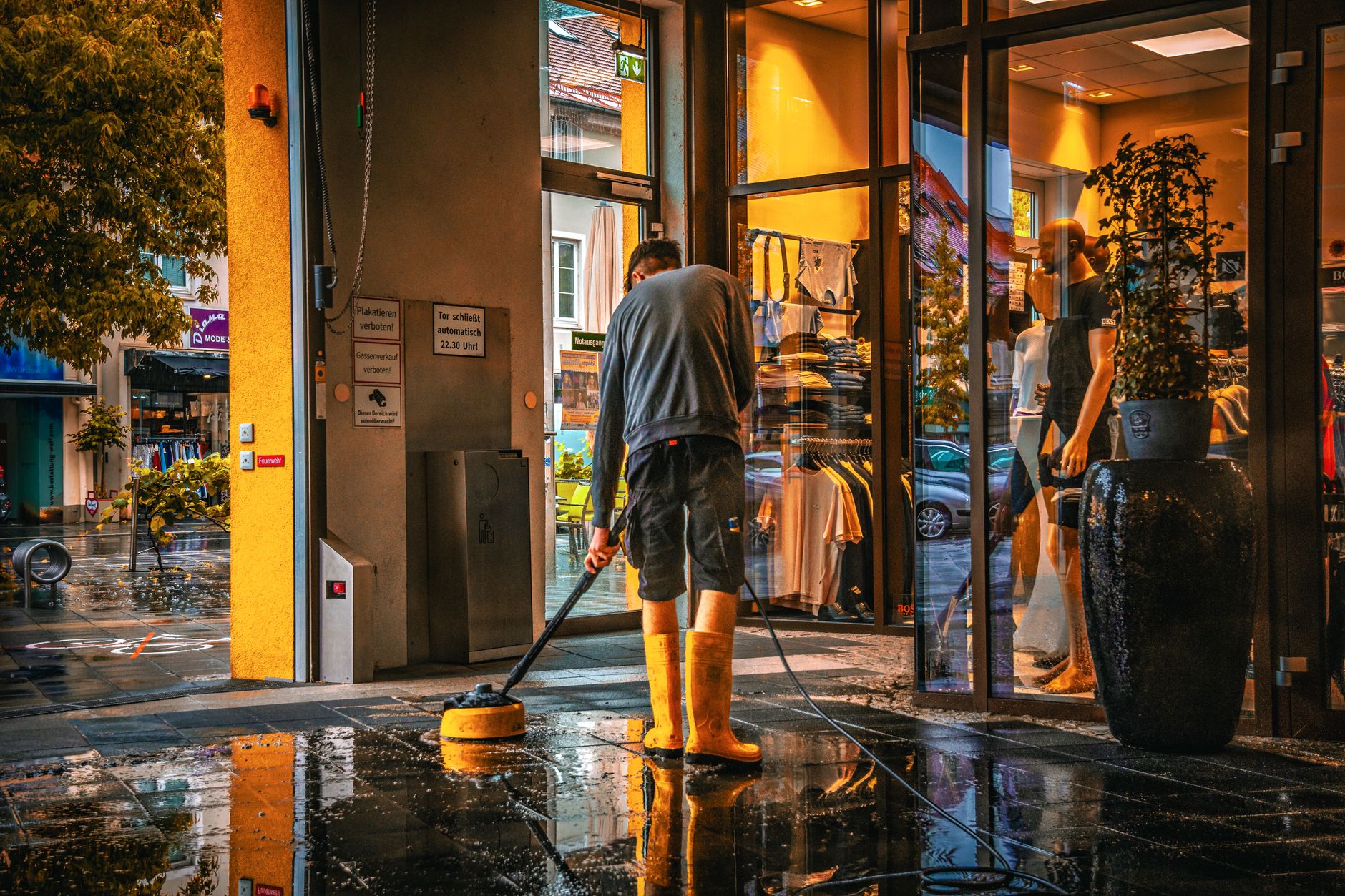
If you're asking "do I need public liability insurance as a cleaner?", the honest answer is: probably yes, even if no law technically forces you to hold it. Cleaners work inside clients' homes and commercial premises every day. That means constant exposure to property damage claims and personal injury claims. A bottle of cleaning solution that damages a hardwood floor, a client who slips on a freshly mopped surface, a broken ornament knocked off a shelf. Any of these incidents can result in a claim that costs far more than a year's worth of insurance premiums.
What public liability insurance actually covers
Public liability insurance covers you when a third party suffers injury or property damage because of your work. As a cleaner, third parties include your clients, their household members, their staff, and anyone else present while you're on the job. If a client trips over your equipment bag and breaks their wrist, your policy covers the legal costs and any compensation. If you accidentally damage a client's furniture or flooring, the policy covers the repair or replacement bill.
It doesn't cover your own tools or equipment (that's a separate products and equipment policy), and it won't cover intentional acts. But for the everyday accidents that happen in a cleaning business, it's the most important policy you can hold. For a broader picture of how public liability works across different business types, see public liability insurance: what every business owner needs to know.
Is public liability insurance legally required for cleaners?
There's no single Australian law that mandates public liability insurance for all cleaners. But "not mandatory" doesn't mean optional in practice. Three situations make it effectively compulsory:
- Commercial contracts. Most facility management companies, real estate agencies, and corporate clients won't engage a cleaner without proof of public liability cover. A certificate of currency is usually a condition of the contract.
- Government premises. Cleaning contracts for councils, schools, or government buildings almost always specify a minimum cover amount, often $10 million or $20 million.
- Residential cleaning platforms. Many booking platforms that connect cleaners with homeowners require verified insurance before listing a cleaner on their marketplace.
Even if none of these apply to your current work, operating without cover leaves you personally liable for any claim. If you're a sole trader, that means your personal assets are exposed.
How much cover do cleaners typically need?
Most cleaners in Australia carry $5 million to $20 million in public liability cover. The right level depends on the type of work you do:
Domestic cleaners working in private homes often find $5 million sufficient, though $10 million is increasingly common and costs only marginally more. Commercial cleaners working in retail centres, offices, or industrial sites should strongly consider $10 million to $20 million, because the potential property values and the number of people on site are higher. If you're cleaning in spaces with expensive equipment (server rooms, medical facilities, high-end retail), discuss specific limits with your insurer before you start work.
What risks do cleaners face that make insurance worth it?
The cleaning industry looks low-risk from the outside. It isn't. Cleaners face a specific set of hazards that generate insurance claims regularly.
Wet floors are one of the most common causes of slip-and-fall injuries in Australia. If a client or a bystander falls on a surface you've just mopped, and you didn't put out a wet floor sign, you're likely to be found liable. Chemical damage is another consistent source of claims. The wrong product on the wrong surface can destroy timber, stone, upholstery, or electronics. Theft allegations also come up more than most cleaners expect. If something goes missing from a property during a clean, the cleaner is often the first suspect. While insurance doesn't cover intentional theft, it does cover legal defence costs if you're wrongly accused.
You can read more about the full range of insurance considerations that apply to cleaning work in the article do cleaners need to have insurance in Australia?
Sole traders vs employees: does it change your obligation?
If you're employed by a cleaning company, your employer's public liability policy typically covers incidents that occur during your work on their behalf. You're not personally responsible for holding separate cover in that case.
If you're a sole trader running your own cleaning business, you're personally on the hook for every claim. There's no corporate structure to absorb liability. Many cleaners start as sole traders because it's simple and low-cost, and that's fine. But running a sole trader cleaning business without public liability cover means any claim lands directly on you and your personal finances. If you're weighing up your structure options, can a cleaner be a sole trader in Australia? walks through the key considerations.
What to look for in a cleaning insurance policy
Not all public liability policies are the same. When comparing options, check these specifics:
The policy should cover both domestic and commercial cleaning work if you do both. Some policies restrict cover to one type. Check whether the policy covers chemical damage, because some standard policies exclude it as a known hazard of the trade. Confirm whether subcontractors you bring in are covered, or whether they need their own separate policies. And check the excess amount: a very cheap policy with a $2,000 excess may cost you more than a slightly pricier policy with a $500 excess when a claim actually comes in.
Upcover offers public liability cover designed for trade and service businesses, including cleaners, with options to get covered quickly and adjust limits to suit your work.
The cost of not having cover
A public liability insurance policy for a cleaner typically costs a few hundred dollars per year, depending on your turnover, the type of cleaning you do, and the level of cover you choose. That's a predictable, manageable business expense.
A single uninsured claim is not. Legal defence fees alone can run to tens of thousands of dollars before any compensation is paid. If a client successfully sues you for damaging their property or injuring a family member, the judgment can extend to your savings, vehicle, and other personal assets. The maths isn't complicated. Cover costs less than the risk it protects against.
Getting covered as a cleaner
The process of getting public liability insurance as a cleaner is straightforward. You'll need to provide your business details, the type of cleaning work you do (domestic, commercial, or both), your annual turnover, and the level of cover you want. Most insurers can issue a certificate of currency the same day, which is what clients and platforms ask to see when checking your insurance.
If you're just starting out or still building your client base, don't wait until you land a big commercial contract to get insured. Accidents don't schedule themselves around your insurance start date.